Strengthen fundamentals
Build reliable Mathematics, English and general-awareness habits while adjusting to Class 11 academic demands.
Two-year preparation pathway
Build school academics, NDA fundamentals, physical capability and confident communication gradually through Classes 11 and 12.
Start at the right time
A student cannot join NDA immediately after Class 10. However, the two years that follow are valuable for developing the academic, physical and personal foundations needed for later eligibility.
An integrated programme helps students continue Classes 11 and 12 while preparing systematically for NDA. The aim is not to burden the student with two disconnected courses, but to coordinate school subjects, NDA Mathematics and GAT practice, physical training and personality development within one timetable.
Final eligibility always depends on the current official UPSC notification, including age, education and other requirements. Families should verify those conditions for the student’s intended examination cycle.
Considering a residential programme? Explore the NDA academy with hostel in Pune after 10th to review accommodation, supervision, mess and the daily routine.
Two-year progression
Build reliable Mathematics, English and general-awareness habits while adjusting to Class 11 academic demands.
Use regular practice, tests, revision and supervised study to make preparation sustainable.
Improve stamina, mobility, coordination and confidence through planned activity rather than last-minute training.
Communication, responsibility, teamwork and leadership habits develop through participation and routine.
Timed tests and performance review help students learn accuracy, speed and recovery from mistakes.
Class 11 and 12 academics remain essential and must be coordinated carefully with competitive preparation.
Before increasing the workload
Before adding many practice books, find out which familiar ideas the student can use independently. This short learning check is preparation advice, not an admission test, a diagnosis or an assessment of official NDA eligibility.
Try a familiar fraction or percentage question without notes. For example, three quarters of 16 is 12: can the student explain why dividing by four and multiplying by three works? Then change the values and try again. A remembered answer is different from a reusable method.
Take a simple question from a completed school science chapter. Underline what is given and what is asked, then write the units before calculating. If the first step is unclear, record that specific difficulty rather than labelling the whole subject weak.
Choose a short school-textbook paragraph. Ask the student for its main idea in two sentences and one unfamiliar word in context. Check meaning together; the task is understanding, not speaking quickly or reproducing every sentence.
Use four columns in a notebook: task and source; what I could do without help; the exact step that needed help; and the next similar question to attempt. Keep the first attempt so that a teacher can see the reasoning, not just a corrected answer.
For example: “I found three quarters of 16 but could not explain the method” leads to revisiting fractions and trying fresh values. It does not justify a prediction about a future examination result. Keep unfamiliar Class 11 topics separate from gaps in topics already taught.
Choose one academic prerequisite to repair and one routine to establish, such as checking the next day's school work. Review those two actions at the end of the week. If help is needed, take the original attempt and a precise question to a teacher. Increase practice gradually around school commitments rather than treating a longer timetable as evidence of progress.
Continue with the Class 11–12 integrated preparation overview and the academic guidance worksheet. Families can bring this record to a campus enquiry; it is not a promise that any particular course or outcome is suitable for every student.
Coordinate the workload
A weekly plan should show what will be reduced as well as what will be added. For a student starting NDA preparation after Class 10, school assignments and already-announced tests are real commitments. Use the example below to discuss workload with a teacher; it is an illustrative planning method, not the academy's prescribed timetable or an official examination schedule.
Imagine a Class 11 student has a school Mathematics test on Friday and a Physics assignment due Thursday. The planned extra work also includes a new NDA practice chapter and an English passage. First write the school chapters, assignment requirements and available study periods. Do not count lesson time, travel, meals or sleep as spare study time.
If the school test includes quadratic equations, a short set on that already-taught idea may serve both school revision and competitive preparation. Check that the questions match the student's current level. A completely new topic is additional learning, even if it appears in the same subject. Move that new chapter to a later review point rather than squeezing it into every evening.
The Physics assignment, test revision and a small independent check of the quadratic method. Keep a short English passage only if it fits without displacing essential work or rest.
Record the extra new chapter as postponed, with a review after the school test. Postponement is a planning decision, not completion; do not silently remove it from the record.
After the test, inspect the student's working and the remaining assignment load. Restore practice gradually according to the next commitments, not by doubling every missed task.
Take one page to the teacher: deadline, topic, current attempt, task to keep, task to defer and next review. If two teachers assign overlapping work, ask which task demonstrates the shared learning goal and which still needs separate completion. Confirm any change to required school work with the responsible teacher; a personal plan does not grant an exemption.
Use the first-week starting-point check to identify prerequisites, the integrated programme overview to discuss coordination, and the unfinished-study-plan example when agreed work is only partly complete. This approach measures an achievable next step, not future selection chances.
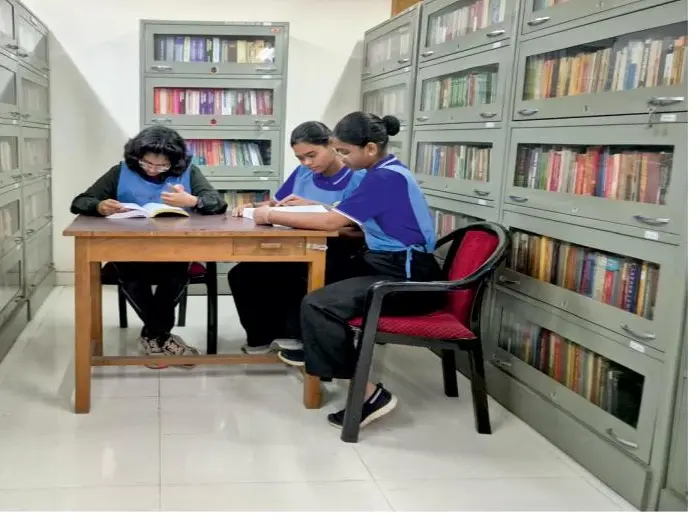
A balanced weekly plan
A good programme should leave enough time for sleep, meals, revision and recovery. Discipline is useful only when the schedule remains educationally sound.
Parents ask
Planning a campus visit? Read our NDA academy in Pune after 10th selection guide for questions about teaching, hostel supervision, fees and parent support.
No. The preparation may begin after Class 10, but examination eligibility depends on completing or appearing in the required 10+2 stage and satisfying the official notification.
The integrated structure is intended to keep school academics central while coordinating NDA practice. Families should review the timetable and academic support before admission.
The appropriate stream depends on the student’s strengths and intended defence entry. Specific entry eligibility must be checked against current official notifications.
Personal guidance
Share the student’s Board, Class 10 performance, preferred stream and defence goal for a suitable pathway discussion.
Call admissions